
In recent years, “PVC profiles” have become a buzzword in the industrial sector. From door and window profiles to industrial components, why has this material rapidly penetrated so many industries?
1. What are PVC profiles?
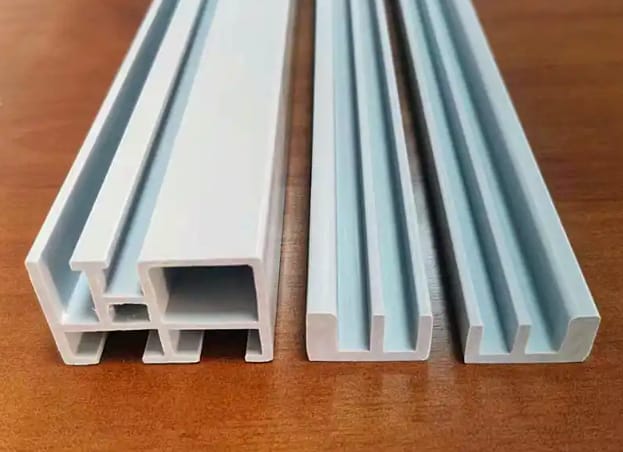
PVC profiles (polyvinyl chloride profiles) are custom-shaped, non-standard profiles manufactured via an extrusion process using PVC as the primary raw material. Unlike standard PVC pipes or sheets, they are produced using molds to create complex cross-sectional shapes (such as L-shapes, U-shapes, or hollow structures). Combining lightweight properties, corrosion resistance, and low costs, they serve as an eco-friendly alternative to metal and wood.
2. Why have PVC profiles become so popular?
Cost advantage: Compared to aluminum alloys, PVC profiles are 30%–50% cheaper and eliminate the need for complex processes like electroplating or painting.
Performance upgrades: The addition of stabilizers and reinforcing fibers significantly enhances aging and impact resistance (with some products boasting a lifespan exceeding 20 years).
Driven by environmental policy: Under national “Dual Carbon” goals, the recyclability of PVC profiles (with a recovery rate exceeding 90%) makes them a preferred choice in the industrial sector.
Data support: According to the China Plastics Processing Industry Yearbook, the consumption of PVC profiles in the construction sector grew by 27% year-on-year in 2023.
3. Key application scenarios for PVC profiles
Construction industry: Doors, windows, curtain walls, and guardrails (accounting for over 60% of usage); particularly suitable for meeting the lightweighting needs of high-rise buildings.
Industrial manufacturing: Equipment housings, shelving units, and pallets (offering strong corrosion resistance as a substitute for steel).
Home improvement: Sunrooms and decorative moldings (offering design flexibility, including custom curved or openwork shapes).
Case study: A door and window brand adopted PVC profiles, resulting in a 40% reduction in weight and a 50% increase in installation efficiency.
4. Three tips to avoid pitfalls when purchasing PVC profiles
Check raw material grade: Look for “S-grade” (high impact resistance) or “J-grade” (superior weather resistance) and avoid recycled materials (which are prone to embrittlement).
Examine structural design: Cross-sectional wall thickness should be ≥2mm, and load-bearing capacity relies on a rational layout of reinforcing ribs. Ancillary Services: Top-tier manufacturers offer one-stop services, including cutting, drilling, and processing of recycled materials.
Buyer Beware: Low-cost profiles may use calcium powder instead of stabilizers, making them prone to yellowing and deformation over time.
5. Future Trends: High-Potential Markets for PVC Profiles
New Energy Vehicles: Lightweight interior components (e.g., door panels, dashboard brackets).
Photovoltaic (PV) Mounting Systems: Replacing galvanized steel to reduce installation costs.
Agricultural Greenhouses: Enhanced weather resistance, suitable for regions with extreme climates.